Showing posts with label Post-Trip Blogs. Show all posts

Monday, March 26, 2018

Post Trip Thoughts: Communication is Key (Kryslynne)

Have you ever heard of the saying, don't judge a book by its cover? Of course you have. I am sad to inform you that I did just that with Belize. But after getting to emerge myself in experience I was able to connect with the people on a deeper level.


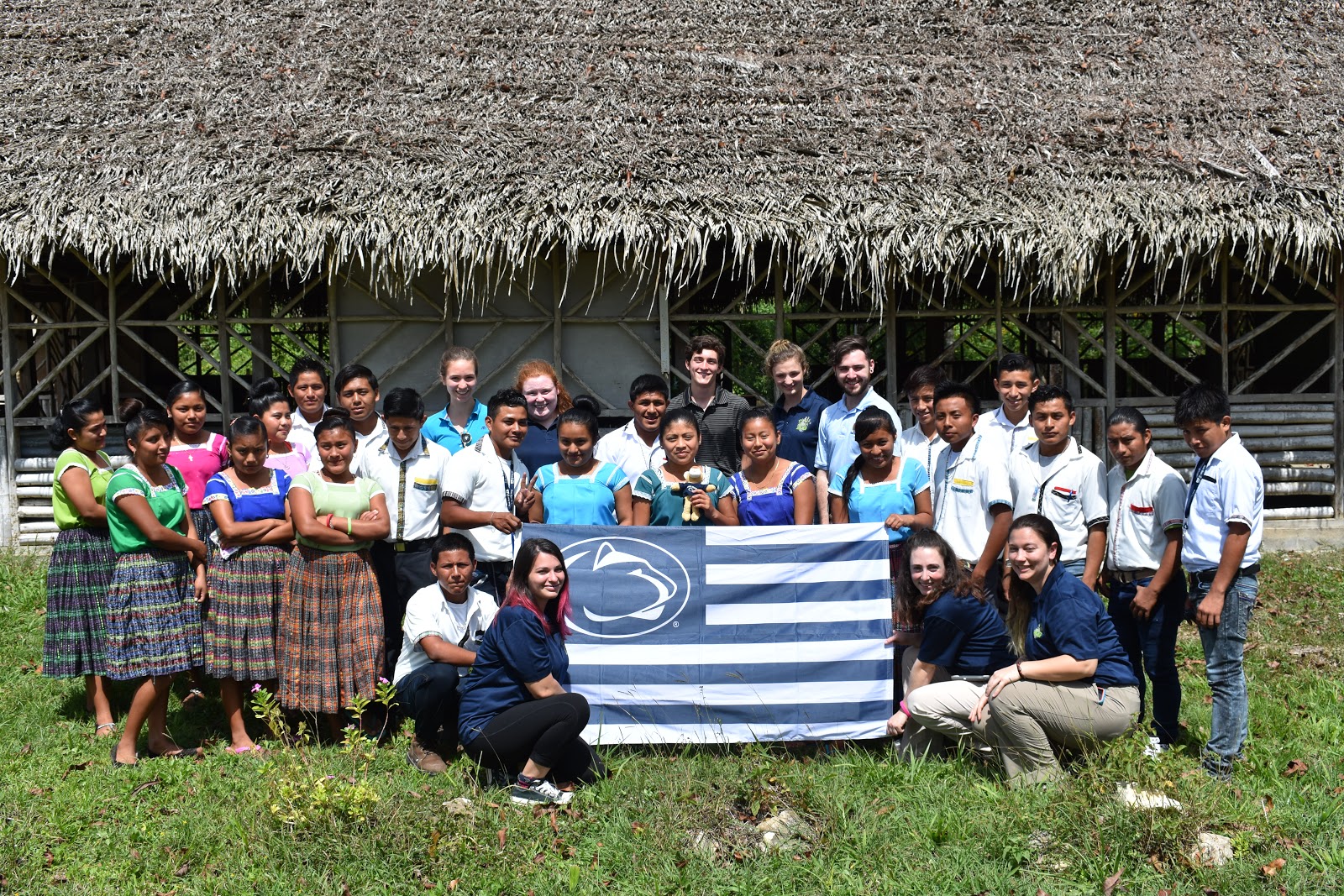
One thing that I really enjoyed was being able to talk one-on-one with some of the students from Tumulkin Center of Learning. Before our tour of the school, I spoke with two first year, female students. While we were talking to they shared with us some of the classes they were currently and what their favorite subjects were. I remember that one of the students said she enjoyed her math class and I jokingly asked her if she'd be my tutor but she declined. They also told us what role they played within the school outside of traditional education. The school has a garden that all of the first year students take care of and the food grown was then used in the kitchen to feed everyone. They explained to me how they woke up at 6am to tend to the garden. That just seemed absolutely crazy to me but to them, it was just their way of life. Even though looking after a garden is not considered a core subject it still teaches students important life lessons. These kids were learning how to provide for themselves and their families in the future. What these students are willing to do to receive an education is inspiring. It made me stop and think about how I might be taking some of my educational opportunities for granted. Without getting the chance to talk with the students I probably would have never realized how much the school relied on the participation and dedication of the students. 

If I would have to pick my biggest take away from this trip it would have to be that the best way to learn about an area or place is to speak with the people who live there. They can provide you with information that you can't read in about online because you actually have to go there to find it. 


Kryslynne is a sophomore in the Agriculture and Extension Education Major at Penn State 

Post Trip: Sustainability in Belize (Sarah)

In Belize, I have learned a lot about Mayan farmers and how their surroundings and culture impact their production. The type of production done in Belize is a sustainable goal to have a constant influx of food to feed their family. To me, sustainability is something that I learned about in a university setting. To be sustainable is to be constant in one form or another. Most Belizean farms are not an example of a sustainable business since most farms do not even sell their crops, but keep them to feed themselves and their families. The farms, however, are a sustainable source of food mainly due to the simple fact that the Belizean culture and environment have allowed for continued production.

To a farmer in Belize, the farm may be to one and only source of food, so it must be sustainable. These farmers did not learn their sustainability knowledge from a university, but their family and communities. At Polo's farm, Polo had over 30 crops all being grown at one time. This gives Polo and his family a way to harvest different crops at different times, and have a constant influx of food for the family.

The farming at Manuel's farm included what is called the three sisters farming practice, where corn, beans and squash are all grown together because of the benefits they all have for each other. These methods were passed down to him from his elders and have helped the crops bring in a good yield for Manuel.

Sarah Miller is an Agricultural Science major at Penn State

Post Trip Thoughts: Never Only One Way (Britton)

It has been roughly two weeks since we have arrived back home. While I was in Belize I have learned a lot not only about the country, but about myself as well. There were so many AMAZING experiences that happened in the short amount of time that we were in Belize.

During the reflection with Dr. McCubbins, He had laid out a bunch of post cards with different pictures on them. We were to pick a card that explained what he had done/ learned from the day. The post card that stood out the most to me was one with a road sign that said "one way". During the day I realized there is never just one way of doing something. 
The Most Important concept that I picked up from Belize, is the ides that there is never only one way to do things.

The first time I came into contact with this Idea was at Mr. Polo's farm. On his family's farm they raise over 26 products to be able to sell and make a living from. This is different than in the United States where there are a lot of monocrop farms that raise and sell one product. Mr. Polo and his family were really welcoming to us and were open when telling us about their farm and their products. They have so many products that sometimes not everything gets harvested on time. 

The second farm that we toured was Mr. Rudolpho's beef cattle farm (I talked about this in one of my previous blog posts). I had an ability to connect with Mr. Rudolpho because we are both beef cattle producers. He raises Brahma cattle, even though they are not the highest quality breed, they are the only breed that Guatemala will buy. This was new to me, being that even though back home (in the US) we raise a lot of angus cattle for their good quality meat. This is when I realized that something that is good in one place might not be good in a different place.  The same one item might not mean anything to people in one community, but in another community it means a lot more. 

I think that I was better able to take in my surroundings once I realized that there is never one way from doing something. 

Britton is an agricultural extension education major at Penn State 

Sunday, March 25, 2018

Diversification is Survival: Tips from Trevelino (Lex)

I have been fortunate enough to travel to some incredible places, but none compare to Belize. Whenever I travel I hate feeling like a tourist. I don't want to go to the typical tourists traps and do what everybody else does. I love to find things off the beaten path that only the locals know about, and I feel like we were able to do that on this trip. Now it was a school trip and we worked with CELA Belize so we weren't really tourists, but I really felt exposed to the local culture in a way I haven't on previous trips. Earlier in the semester we learned about indigenous knowledge and the roles that it can play. Being able to interact with the locals directly gave us the opportunity to learn more about their culture. The best example I can think of is when we were at the San Ignacio Market and a pair of locals explained the difference between the "local" chicken and the "normal" chicken (you can check out my previous post to learn the difference). I feel like this encounter was my "Aha" moment because I realized I was experiencing indigenous knowledge through informal education.

When I look back on trips like these the first thing I think of is not what we did, but who did we meet. What did we learn from these people and how do the varying perspectives compare? For example, when looking back at our second farm tour I remember Mr. Juan showing us around his property and explaining that everything there served a purpose. For example, a single tree can help serve as a fence post, can provide shade for the livestock, and can attract birds that sing for tourists on horseback. My biggest take away from that day was when he said "diversification is survival." There were so many different things growing on his farm that there was always something ready to harvest. This is vital for a farm trying to stay afloat when fighting competition from foreign imports.

I personally enjoyed the farms tours. We visited a lot of farms on this trip, but each one of
offered something different. Each one had it's own unique experience that made it memorable. My favorite was after we toured Polo's farm we were given fresh coconut water to quench our thirst from the heat. I love coconuts and being able to fill my water bottle with coconut water was a highlight for me. When I had previously traveled to Central America I was told that the yellow coconuts are no good. Only the green ones were safe to eat. However at Polo's farm they were cutting both green and yellow coconuts. I eagerly tried both and could not taste a difference. People in Costa Rica believe that yellow coconuts are inferior, but in Belize the only difference is the color. This was an enlightening moment for me because I was able to compare the different perspectives on coconuts. I realized that the indigenous knowledge for this area can be totally different compared to another area even though they are addressing the same subject. Despite having a preconceived notion on the yellow coconuts I learned something new by acknowledging the new perspective. I believe that is what this trip was about, putting aside our preconceptions in order to open up and learn something new without judgement.

Lex is a freshman majoring in BioRenewable Systems/Biological Engineering at Penn State.

Monday, March 19, 2018

Return Thoughts: Fair Governance Lessons from the Mayans (Daniel)

What is fair play? How do groups of individuals come together to accomplish shared goals?

These are questions that come out in my professional and personal life. As a teacher educator, I work to help teachers motivate and empower students and as a professional parliamentarian, I am often called upon to help organizations reach higher levels of success.

I was fascinated to learn about some aspects of the Mayan culture including: 
  • The Alcade
  • Fahina

The Alcalde

The Alcalde is a selected member of the village that chosen to lead the group. It is interesting to note that their responsibilities are not to make decisions, rather facilitate the process to reach consensus and keep the peace and order. As a parliamentarian, I can appreciate the idea of a leader helping a group to be successful in their goals opposed to an authoritarian dictator making decisions. 

This concept of Alacade is integrated into the learning at one of our school visit sites: Tumul K'in Center of Learning. The elect an Alcalde for each grade level each year to help lead the student body in self-governance.

Fahina

Fahina is an activity where a group comes together to complete tasks for the greater good. I love how this speaks to the responsibility each of us in any group setting (i.e. class, teams, etc) to contribute. There is a personal responsibility that each of us have to be the change we wish to see in the world. This comes to life in the village on a quarterly basis and on a monthly basis in the Tumul K'in Center of Learning. Students tackle various tasks like cutting firewood, cleaning, garbage, etc.

You can learn more about our school visit here: http://www.tumulkinbelize.org


These experiences and conversations push one towards self-reflection. Questions to ask yourself like:

1) What is my "Fahina" contribution?

2) Would people in groups I am involved in want me to serve as their Alcalde?

3) How can I be more of servant-leader in day to day living?


Daniel Foster is an agricultural teacher educator at Penn State and a Professionally Registered Parliamentarian with the National Association of Parliamentarians

Post-Trip Blog: Transformative Tropical Travel (Olivia)

My passion for agriculture was cultivated in the soil of my high school years. When I was a junior, I ran for the title of Miss Cecil County Farm Bureau, something utterly outside of my comfort zone as well as persona. However, this leap from comfort was a pivotal point in my agricultural career.

During my reign, I was not only exposed to, but immersed in extremely rare opportunities to advocate on behalf of the industry that I love. Through my county and state Farm Bureaus, I was able to meet Maryland Governor Larry Hogan several times, attend legislative sessions in both the state capitol and Washington, D.C., and even meet and talk to senators and their constituents. 

This program was the first time that I really saw the power of the agricultural community. Maryland's county Farm Bureaus, as well as the overarching state organization, were incredibly passionate for and invested in the future of agriculture in the state, and as someone who didn't grow up on a farm, it was the first time that I truly felt as if my voice mattered to the industry.

Now three, almost four years since I have held the title of Miss Cecil County Farm Bureau, I feel a revitalized sense of community and belonging within the industry I love, this time on an international scale.

Throughout my time in Belize, I was amazed at the pride in which the Belizean people took in the integrity of their Belizean agriculture. For example, the Belizeans almost always preferred to buy "local chicken" instead of "Mennonite chicken." To put that into an Americanized context, this essentially meant heritage breed chickens versus broiler chickens. However, almost all of the Belizean people preferred the chicken which was homegrown in their community, and took pride in the fact that they were able to support their friends and neighbors while reducing their environmental footprint. 

Another particularly intriguing aspect of my trip to Belize was our time spent at Spanish Lookout, one of the Mennonite communities in Belize. As someone who was raised around Anabaptist sects such as the Amish and Mennonite, I was interested to see the dynamic of this religion in a different context. During our time in the community, I was struck by the diversity that I saw working at the various Mennonite operations, which I found to be strikingly different than the United States. 

When I asked one of the Mennonite business owners if they typically only employ members of the Mennonite community, he elaborated on their diversity within the workplace. He said that they typically have an oversupply of workers, which is very different from America. I found it really interesting and refreshing to see the inclusion of every community in these typically conservative communities. 

The aspect of agriculture that I have always love the most is community. I love knowing that there is a group of people there to support me, care for me, and watch me grow who are just as passionate about the industry that I hold closest to my heart as I am. My time in Belize helped me realize that these communities, founded on the principle of agriculture, exist all over the globe, and to this day agriculture serves as the glue for every society in every corner of the world. I am so glad to have been able to experience these communities first hand, and it has added fuel to my fire of investment in the industry as a whole. 

Olivia is a sophomore majoring in Agricultural Science at Penn State

I Belize in the Future of Agriculture: Post Travel Blog (Erin)

Agriculture wears a lot of different hats. It looks different across the world. It is based in culture, tradition, and the importance of providing for, and serving others. Traveling to Belize was a reminder of the impact agriculture has. A reminder of it's overall importance.

In the United States, agriculture is oftentimes an afterthought. For the most part, we are fortunate enough to be food secure, and for many people, the thought of where their food comes from stops at the grocery store. Most people are generations removed from the farm, therefore creating a disconnect between farmer and consumer.

Agriculture looks a lot different in Belize! 
In Belize, we saw the importance of agriculture from the start of our trip. We saw how agriculture spread its roots in Mayan culture, in Mennonite culture, and beyond. One of the things that stood out to me, was the Mayan people and their dedication to their land. People historically would walk up to two hours JUST to get to their farms, and everyday would continue to farm.

I think in travel it's easy to look at just the differences between here or there. But differences don't bring people together. As the trip continued, I realized that even though agriculture looked different, that we all had similar concerns that impacted our industry. In both the United States and Belize, the average age of farmers continues to get older. We talked with local farmers about the uncertainty of who will take over their farm, and what will be left behind. We also discussed how the general outlook towards agriculture prevents people from wanting to involve themselves in it. Oftentimes, agriculture is seen as unappealing, something that is a last resort. It makes things difficult in bridging the age gap between the younger, and older generations.

As a future teacher, I hope to always remember to focus less on the differences, and embrace the similarities between experiences, cultures, and people. I think if we're always thinking with an "us vs. them" mentality, we can't build a connection with students. I think that's why traveling is so important. In class leading up to our departure, Belize to me was in my mind as somewhere far away. The places we talked about weren't concrete or real. It was easy to talk about agriculture, or education in Belize from afar, because we weren't made aware of the intricacies that exist from up close. Essentially, we had very limited indigenous knowledge about Belize, and the people who lived there.

Traveling makes the indigenous knowledge known, and although we'll never be experts in it, we'll at least be made aware of it. That was the entire point of #TeachAgBelize. I mean, the official class name is "Indigenous Knowledge in Agricultural Education"so I guess that makes sense. It's funny how things really come full circle when you take the time to really process your experience.

I am thankful for this experience, and for the opportunities that I have as a Penn State student. This trip would not have been possible without Dr. Miller-Foster, Dr. Foster, Dr. Ewing, Dr. McCubbins, and CELA Belize (especially Lauren and Jorge who were with us from start to finish), and I'm thankful for all that they did to make this trip as amazing as it was. I'm also grateful for my classmates, Kurt, Olivia, Britton, Kryslynne, Lex, Sarah, and Gillian. I had so much fun traveling with you guys, and getting to know you more. You all have so many different areas of knowledge and passions that taught me so much over the course of the week.

If you are interested in seeing our final presentation about what we learned, you can come to Ferguson 214 on Monday, March 26th at 4pm!

Erin Langdale is a sophomore in the Agricultural and Extension Education major at Penn State. 

Reflection on Belize: Teaching and Learning in Various Ways (John)

It is hard to believe that our 9-day experience to Belize has been over for more than a week now. The experience was amazing for me, as this was my first time traveling with a group of students beyond the borders of the United States. Any time you travel with students there is some apprehensions as to whether or not everything will go as planned. I will admit that these feelings were greater for this international experience. However, through careful planning (thank you @GlobalMelanie, @CELABelize, and many others that made this experience happen) diverse experiences can be provided to our students (and instructors) that will impact their knowledge, skills, and dispositions for the rest of their lives.

As I reflect on the trip and this past week of being home, I have come to realize the impact of the trip will truly last a lifetime. Again, the trip itself was exciting and educational on many levels, but I believe the events following the trip can be just as important. How can this be, since the travel abroad experience was so amazing? Well, it is because everywhere I went this past week I was able to share the great things that happened on the trip. Yes, the trip has a huge impact on those of us that traveled and actually experienced Belize first-hand, but I believe when we come home and share the experience with others, we are broadening our impact. Not only do we have the opportunity to "re-live" our experiences (which helped me reinforce the "why" of the experience), but we are providing insight to those with whom we interact. Since returning, I shared my experiences with people from the ages of  7 to 77 (maybe even older, but I am not going to ask). Each person asked different questions and had different interests in what I saw and did while in Belize. This is the exciting part of such an experience. Everyone I talked to this past week wanted to know something different about Belize. 


One of the questions that I kept getting really made me think about how people view the "tropics", and in this case specifically, Belize. Everyone wanted to know if we spent time at the beach/snorkeling, etc. I think many people view these countries simply as places where we vacation and relax. While each of us need these experiences in our lives (and Belize can provide these), I was able to share that our trip had different objectives for our students. It was fun to hear peoples' responses when I shared our educational objectives were focused on examining agriculture, education, and what/how knowledge is shared in Belize. They wanted to know more about Belize and these topics, and our discussion quickly turned from "vacation" to a more in-depth discussion about agricultural products (I usually highlighted hot sauces), geography, education, history, and economics.


As I prepared to write this blog, I kept reflecting on something that we encouraged our students to think about during the trip. How is knowledge passed on to future generations? I realized that I have the opportunity almost each and every day to teach in formal, informal, and non-formal educational settings about the experiences that I have had in my life. I believe the last two weeks have allowed me to learn through each of these ways, as well. Prior to our trip we were teaching and learning about Belize in mostly a formal way, then while in Belize we were experiencing mostly non-formal/informal opportunities to learn, and now that I have returned most of my teaching about Belize in the last week has been in the informal setting. We had opportunities throughout the week to learn through experiential learning with our hosts, as can be seen in the included photos. I began to realize that the way we were learning through these experiences, were the same way that the "students" in this setting were learning. Whether it was a youth at Mopan Technical High School or a child in a Mayan family, they were learning in the way that the "educator" believed was best for that situation (formal, non-formal, informal). There are deep underlying philosophies of education, life purpose, and more involved in these decisions, and I am thankful that I had 9 days of experiences in Belize AND now I have a lifetime to reflect and share these experiences with others through my own opportunities to educate others!

John Ewing is an agricultural teacher educator at Penn State University. He can be reached via email at jce122@psu.edu

Sunday, March 18, 2018

Post Trip Blog: The Full Experience (Kurtis)

First off, this post definitely won't actually cover the full experience. There were too many highs and lows, early mornings and late nights, and good food and non-vegetarian options (oops) to explain the whole trip in detail.

This was my first international trip in which I felt immersed in the country's culture. In high school, I traveled to Haiti for a missions trip, but we were very sheltered from the rest of the country, and did not leave the orphanage we stayed at very often. That being said, I understand that a week-long experience only allows for so much cultural education. From staying in San Ignacio and walking around downtown, to staying in the Toledo district surrounded by Mayan culture, the experience was both amazing and challenging.

A huge challenge I had was when we stayed in the Toledo district. We stayed at a lodging of the Toledo Ecotourism Association (TEA) in a Mayan community. The lodging was basic, but safe and comfortable. It was refreshing to hear nature so clearly at night, and be able to look up and see the stars so beautifully. After all of these positive aspects, you may be wondering what was challenging. To be honest, the interpersonal reactions we had with the families who hosted us were collectively the most challenging experience. The language barrier and cultural differences made conversation difficult at times.

Two specific interactions which I learned so much from happened our last night and last morning staying at the TEA lodging. The last night, myself and other classmates were sitting on hammocks and playing cards, having some fun before we went to bed. A mother and her daughter, who live in the house behind our lodging, came up and started talking to us and watching us play. After a while, I was confused why they were still with us. It made me think to our cultural education, and how Mayan communities live as a community, rather than as people living together. So, while I viewed our lodging somewhat like a hotel that I was staying in, she saw it as a communal house in which her and the rest of the community invited me to stay in. The second happened the last morning. We were told "breakfast at 7". OK, no big deal. Well, luckily, I was awake at 5:45 and ready by 6, because our hosts came at 6:15 ready to feed us. I was stressed because I had to wake up some of my classmates. Not tell them to get ready faster, I had to actually wake them up. After that, while I was waiting for them to come down so we could leave for breakfast, I realized how I stress unnecessarily about time. (This meal was also where the three vegetarians accidentally ate meat, yikes.)

One final thought, which is very minor compared to all of the things I learned in cultural comparisons, is between the different types of farming in Belize. The first farm we visited, a traditional diversified farm, had bananas. The leaves had brown spots growing from the edges of the leaves. I thought it had something to do with the sun when I first noticed it, but after touring an industrial banana farm on the last day of our trip, I found the real reason. The real problem was revealed by our tour guide; it was a fungus, which the plants on her farm did not suffer from regularly because of fungicide sprays. A very minor observation, but something I thought was interesting.

Being that I want to work internationally after graduation, the cultural and travel experiences I was afforded for this class were invaluable.

Thanks for reading! Come to our final presentation on Monday, March 26th at 4pm in 214 Ferguson Building.

Kurtis Miller is a senior studying Animal Science.

Wednesday, March 14, 2018

Return Thoughts: Looking Back to Look Forward (Gillian)

Our time in Belize flew by, and I find myself reflecting on a great trip packed with lessons and memories while I shiver from the freezing temperatures and snow in Pennsylvania. I already miss the experiences and sun in Belize but I am so lucky to have had this opportunity and look back on it as a good memory.

Listen, ask, and Experience (to learn!)
Our study abroad trip was way more than just a week-long trip though. I learned lessons and grew as a person, both of which I know will help me down the road, no matter where I go.

I learned how to talk with people. I knew how to before, but not with the same engagement and connection as I experienced in Belize. By finding similarities between us instead of dividing people due to differences, I grew closer to people I had just met and became more comfortable with the conversations once I realized we are all quite similar. I believe this understanding and comfort helped open the conversations to deeper explanations, more questions, and furthered our learning. I can use this lesson to connect with people when I travel, but also around my own town as well. By making connections and deepening conversations and relationships, I will be able to interact with people better, a skill that will be useful in personal or professional relationships, or in daily life.

I learned how to ask questions. Every evening we began to think about what was coming up for the next day and what we were curious about. Allowing myself to think ahead to come prepared allowed me to ask questions that reflected my interest, curiosity, and led to deeper conversations. The ability to ask questions will help me connect with people, explore new experiences, and will deepen my understanding of the things around me.


Not only were the farms producing, but they were absolutely beautiful too!
I learned about agriculture. As the main topic of this trip, this lesson was a bit more expected than the rest, but exciting nonetheless. Touring various types of farms throughout Belize helped me understand similarities and differences within Belizean agriculture and also between agriculture in Belize and the United States. I was quite impressed with the intense knowledge that each farmer has about their farm and their ability to use their lands in a variety of ways: by growing a large variety of crops, by planting trees in specific areas to not only provide fruit but a natural fence line and shade for animals as well, or harvesting for the now while planting and preparing for the future generations to farm.

I also furthered my conversations by asking questions throughout the tours, leading to great questions and answers to my questions. For example, at Mr. Juan’s farm, we started talking about his use of horses in the tourism side of his farm. When he asked what breeds of horses I have and learned that I have quarter horses, we immediately talked about the numerous benefits of the breed and how they are one of his favorites too! However, he did not share my enthusiasm for the thoroughbred which led to more of a pro/con discussion.


The people made this trip extra great!
I learned a lot about myself too and grew in necessary areas for the future. Going into this trip, I was pretty nervous about my ability to travel to the country and then manage everything once I got there. I’ve traveled around the country a lot and have gone out of the country a handful of times, but every trip out of the country has been with my family. This added responsibility posed a new challenge to me, one that I was able to handle! With the support from the professors and other students, the trip went very well. I gained confidence in my ability to travel and manage myself in another country. With this new confidence, I also gained independence as I became more comfortable and felt much better by stepping out of my comfort zone by the end of the trip. Personal growth will help me in my future adventures and travels but also in my school, work, hobbies, relationships… everything!


The lessons were numerous and this trip has definitely been filled with learning and fun. I’m excited to use my new knowledge to connect with people wherever I go while being confident in myself and my abilities. While I miss Belize, the people we met, and the experiences we had, I’m excited to apply these lessons now and in the future. I am so appreciative of this trip and to everyone who made it possible. I’m looking forward to what’s next!

Gillian Warner is a freshman majoring in an interdisciplinary major in the College of Agriculture Sciences at Penn State.