
It is hard to believe that our 9-day experience to Belize has been over for more than a week now. The experience was amazing for me, as this was my first time traveling with a group of students beyond the borders of the United States. Any time you travel with students there is some apprehensions as to whether or not everything will go as planned. I will admit that these feelings were greater for this international experience. However, through careful planning (thank you @GlobalMelanie, @CELABelize, and many others that made this experience happen) diverse experiences can be provided to our students (and instructors) that will impact their knowledge, skills, and dispositions for the rest of their lives.

As I reflect on the trip and this past week of being home,
I have come to realize the impact of the trip will truly last a lifetime. Again, the trip itself was exciting and educational on many levels, but I believe the events following the trip can be just as important. How can this be, since the travel abroad experience was so amazing? Well, it is because everywhere I went this past week I was able to share the great things that happened on the trip. Yes, the trip has a huge impact on those of us that traveled and actually experienced Belize first-hand, but I believe when we come home and share the experience with others, we are broadening our impact. Not only do we have the opportunity to "re-live" our experiences (which helped me reinforce the "why" of the experience), but we are providing insight to those with whom we interact. Since returning,
I shared my experiences with people from the ages of 7 to 77 (maybe even older, but I am not going to ask). Each person asked different questions and had different interests in what I saw and did while in Belize. This is the exciting part of such an experience.
Everyone I talked to this past week wanted to know something different about Belize.
One of the questions that I kept getting really made me think about
how people view the "tropics", and in this case specifically, Belize. Everyone wanted to know if we spent time at the beach/snorkeling, etc. I think many people view these countries simply as places where we vacation and relax. While each of us need these experiences in our lives (and Belize can provide these), I was able to share that our trip had different objectives for our students. It was fun to hear peoples' responses when I shared our educational objectives were focused on examining agriculture, education, and what/how knowledge is shared in Belize. They wanted to know more about Belize and these topics, and our discussion quickly turned from "vacation" to a more in-depth discussion about agricultural products (I usually highlighted hot sauces), geography, education, history, and economics.

As I prepared to write this blog, I kept reflecting on something that we encouraged our students to think about during the trip.
How is knowledge passed on to future generations? I realized that I have the opportunity almost each and every day to teach in formal, informal, and non-formal educational settings about the experiences that I have had in my life. I believe the last two weeks have allowed me to learn through each of these ways, as well. Prior to our trip we were teaching and learning about Belize in mostly a formal way, then while in Belize we were experiencing mostly non-formal/informal opportunities to learn, and now that I have returned most of my teaching about Belize in the last week has been in the informal setting. We had opportunities throughout the week to learn through experiential learning with our hosts, as can be seen in the included photos. I began to realize that the way we were learning through these experiences, were the same way that the "students" in this setting were learning. Whether it was a youth at Mopan Technical High School or a child in a Mayan family, they were learning in the way that the "educator" believed was
best for that situation (formal, non-formal, informal). There are deep underlying philosophies of education, life purpose, and more involved in these decisions, and I am thankful that I had 9 days of experiences in Belize AND now I have a lifetime to reflect and share these experiences with others through my own opportunities to educate others!
John Ewing is an agricultural teacher educator at Penn State University. He can be reached via email at jce122@psu.edu
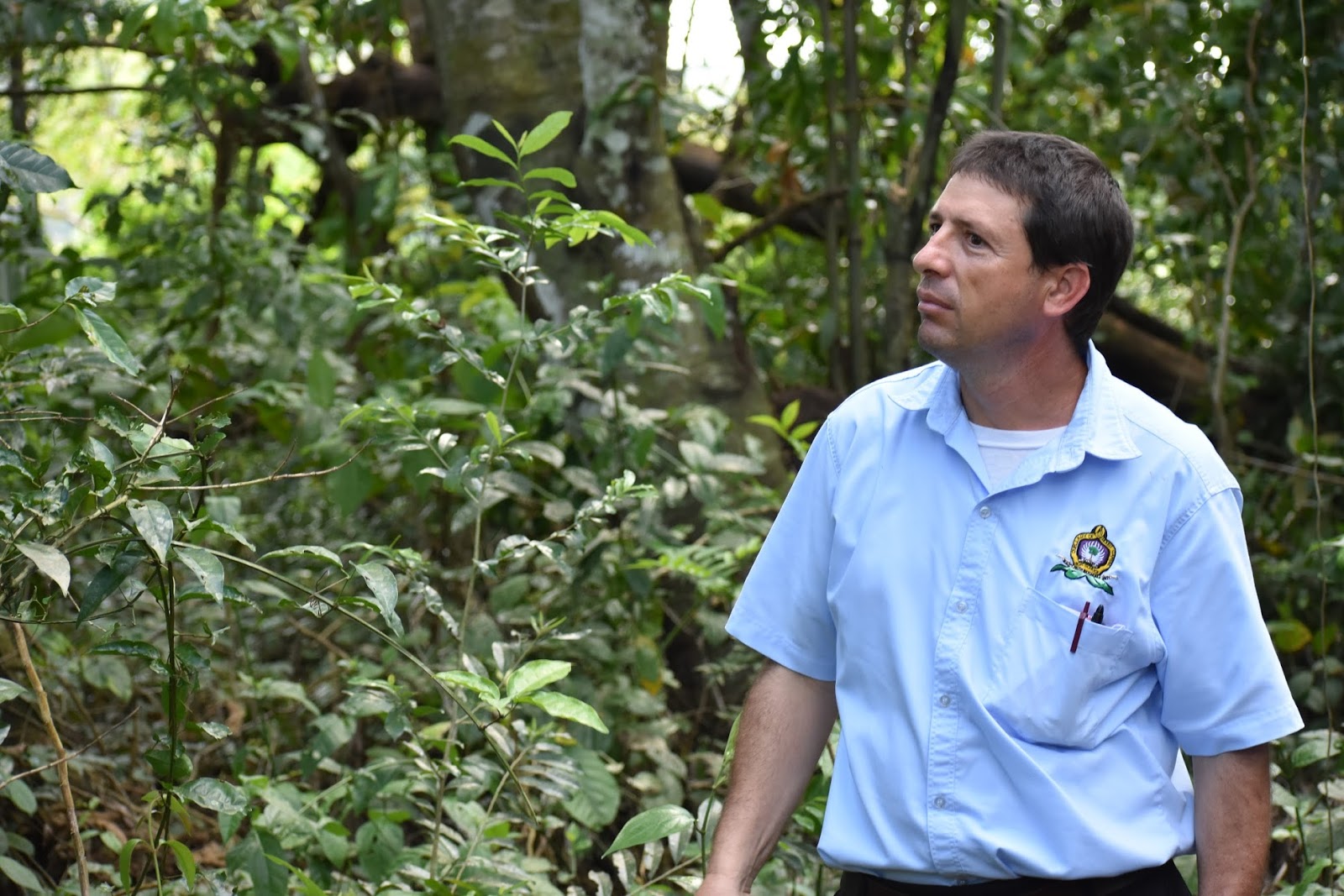 When I look back on trips like these the first thing I think of is not what we did, but who did we meet. What did we learn from these people and how do the varying perspectives compare? For example, when looking back at our second farm tour I remember Mr. Juan showing us around his property and explaining that everything there served a purpose. For example, a single tree can help serve as a fence post, can provide shade for the livestock, and can attract birds that sing for tourists on horseback. My biggest take away from that day was when he said "diversification is survival." There were so many different things growing on his farm that there was always something ready to harvest. This is vital for a farm trying to stay afloat when fighting competition from foreign imports.
 offered something different. Each one had it's own unique experience that made it memorable. My favorite was after we toured Polo's farm we were given fresh coconut water to quench our thirst from the heat. I love coconuts and being able to fill my water bottle with coconut water was a highlight for me. When I had previously traveled to Central America I was told that the yellow coconuts are no good. Only the green ones were safe to eat. However at Polo's farm they were cutting both green and yellow coconuts. I eagerly tried both and could not taste a difference. People in Costa Rica believe that yellow coconuts are inferior, but in Belize the only difference is the color. This was an enlightening moment for me because I was able to compare the different perspectives on coconuts. I realized that the indigenous knowledge for this area can be totally different compared to another area even though they are addressing the same subject. Despite having a preconceived notion on the yellow coconuts I learned something new by acknowledging the new perspective. I believe that is what this trip was about, putting aside our preconceptions in order to open up and learn something new without judgement.